
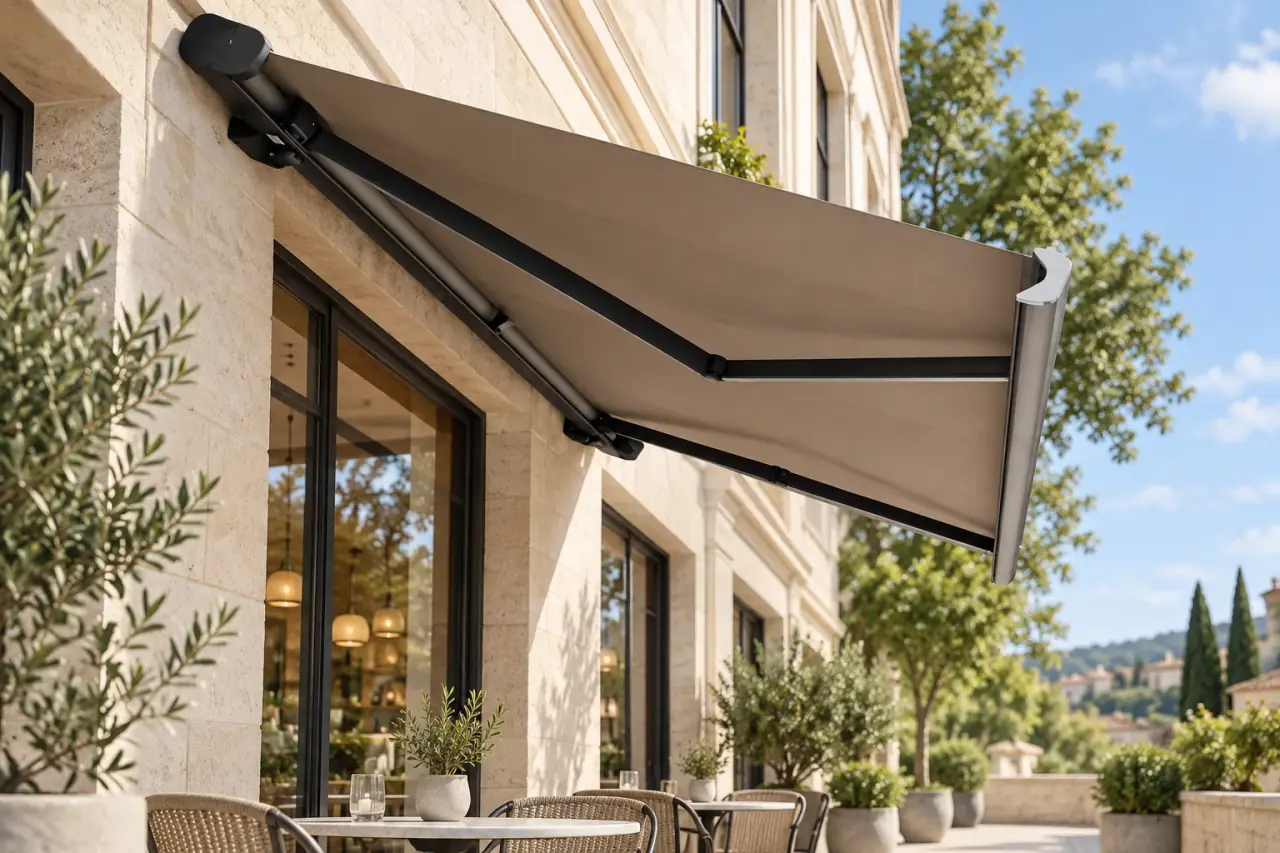
Replacing the fabric may be enough when the problem is confined to the cover and an installer confirms that the existing mechanism and fixings remain suitable. If the awning also struggles to move, has damaged components or needs a different size, compare a repair with a complete replacement. Start by identifying the old model and describing what has changed; do not order new fabric from the nominal awning width alone.
Identify the existing awning before requesting fabric
Look for the manufacturer, model, installation date and any original order or service paperwork. Photograph the whole awning and accessible identification labels without dismantling it. Include the cassette, front profile and attachment area in the enquiry so the installer can identify the arrangement. Approximate overall width and projection are useful for initial discussion, but they are not a fabric cutting specification. Ask who will take the final measurements and confirm the attachment method. A replacement ordered from an unverified photograph or the nominal product width can leave important details unresolved.
Describe the problem without diagnosing it from a photograph
Separate appearance concerns from operating concerns. Note where stains, wear or damage are visible and whether the awning moves normally under its permitted operating conditions. If movement is abnormal, do not keep cycling it simply to collect a better video. Ask an installer to assess the assembly before discussing a fabric-only job. Provide previous repairs and any known changes to the mounting area. The purpose is to establish a credible repair scope. It is not to decide remotely that a motor, arm or bracket is sound because it looks tidy from the ground.
Check whether care is appropriate before assuming replacement
Sunbrella specifies gentle cleaning, thorough rinsing and air drying for its shade fabrics. Follow the instructions for the identified fabric, not a universal recipe.
Explore this topic: Cleaning an awning: identify the fabric before choosing a cleaner
A new colour is not a complete replacement specification
Have the installer confirm the fabric reference, finished dimensions, seams, edge treatment and attachment details for the existing mechanism. If a different fabric is proposed, request written confirmation that the complete replacement is suitable for that model. Ask whether changes to adjustments or other components are included in the work. Do not transfer the previous fabric’s performance statements to a new material, or assume a premium brand name settles compatibility. Keep an approved sample and the agreed specification with the quotation so any substitution can be discussed before work starts.
Explore this topic: PVC or Sauleda fabric for a folding roof: what to specify
Compare the two quotations with the same boundaries
For the fabric-only option, separate material, fabrication, access, removal, refitting and any agreed adjustments. For a new awning, ask what happens to the old unit, existing mounting points, wiring and controls. Clarify which parts remain under their original terms and which receive new service or warranty terms. Avoid calculating a saving by comparing a fitted replacement with a supply-only price. If the existing assembly needs further investigation, keep that uncertainty visible rather than accepting a fixed-looking total that excludes the unresolved work. A lower initial price is meaningful only when its scope is understood.
Confirm the handover before agreeing the work
Ask for the installed fabric reference, care instructions, the agreed operating demonstration and a service contact. Record any retained components and limitations identified during assessment. Discuss how a concern noticed after fitting will be reported, particularly if the fabric supplier and installer are different companies. You do not need to perform mechanical adjustments yourself to accept a job; you need a clear description of the work and confirmation that the installer has checked it. If the assessment shows that a fabric-only solution is unsuitable, ask which findings support that conclusion before deciding on full replacement.
Can I buy the fabric separately and ask someone to fit it?
Discuss that arrangement with the installer before purchasing anything. Ask who accepts responsibility for final dimensions, fabrication details, compatibility and checking the completed job. A supplier willing to sell fabric is not necessarily confirming that another company will fit it or support the result. Put any division of responsibilities in writing, including how an incorrectly made cover would be handled and which party you contact if a problem appears. This is a purchasing decision, not an instruction to dismantle the awning yourself. If no one accepts the complete measurement and fitting scope, resolve that gap before ordering the material.