ZIP screens
Dark-frame balcony screens
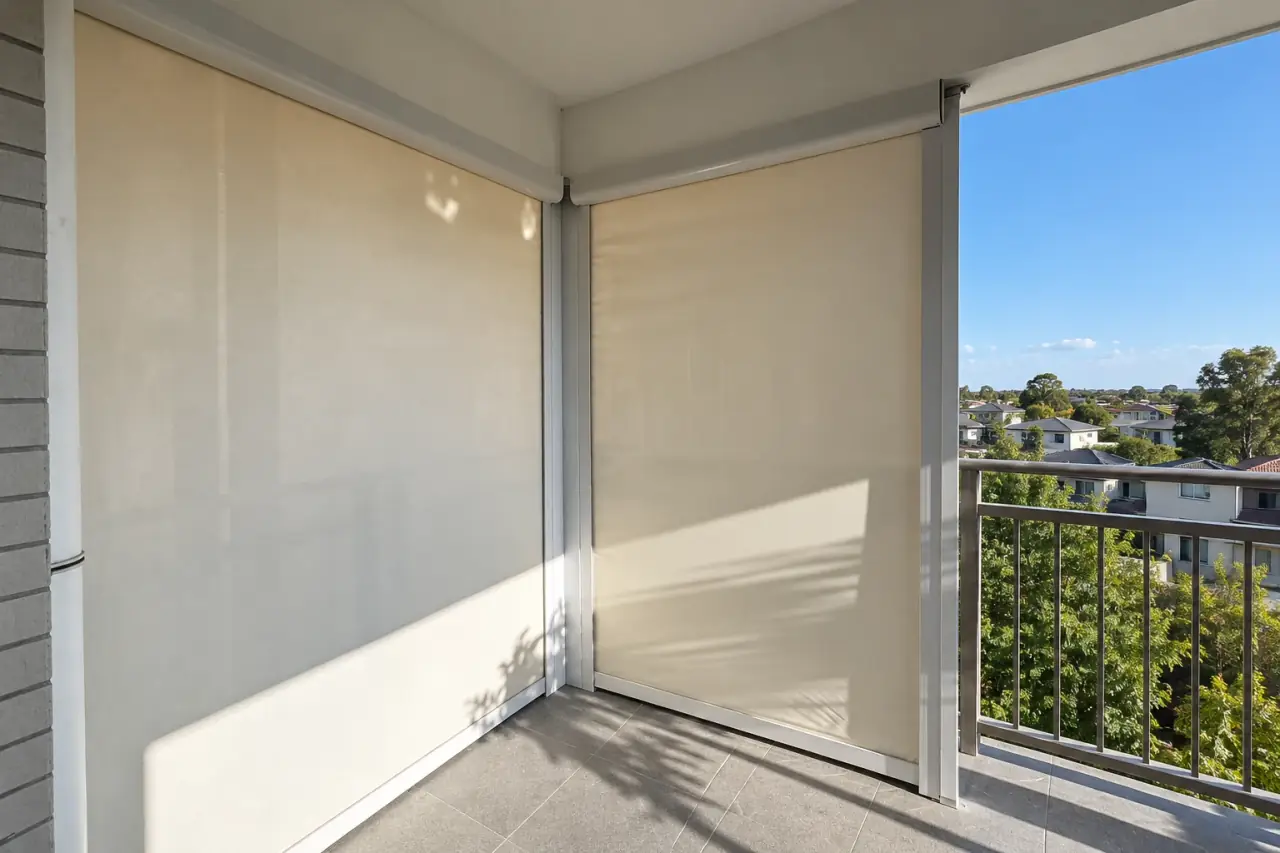
Translucent fabric meets at a balcony corner in dark headboxes and tracks, with the existing safety railing retained below.
Explore this configuration: Dark-frame balcony screens
LINEA
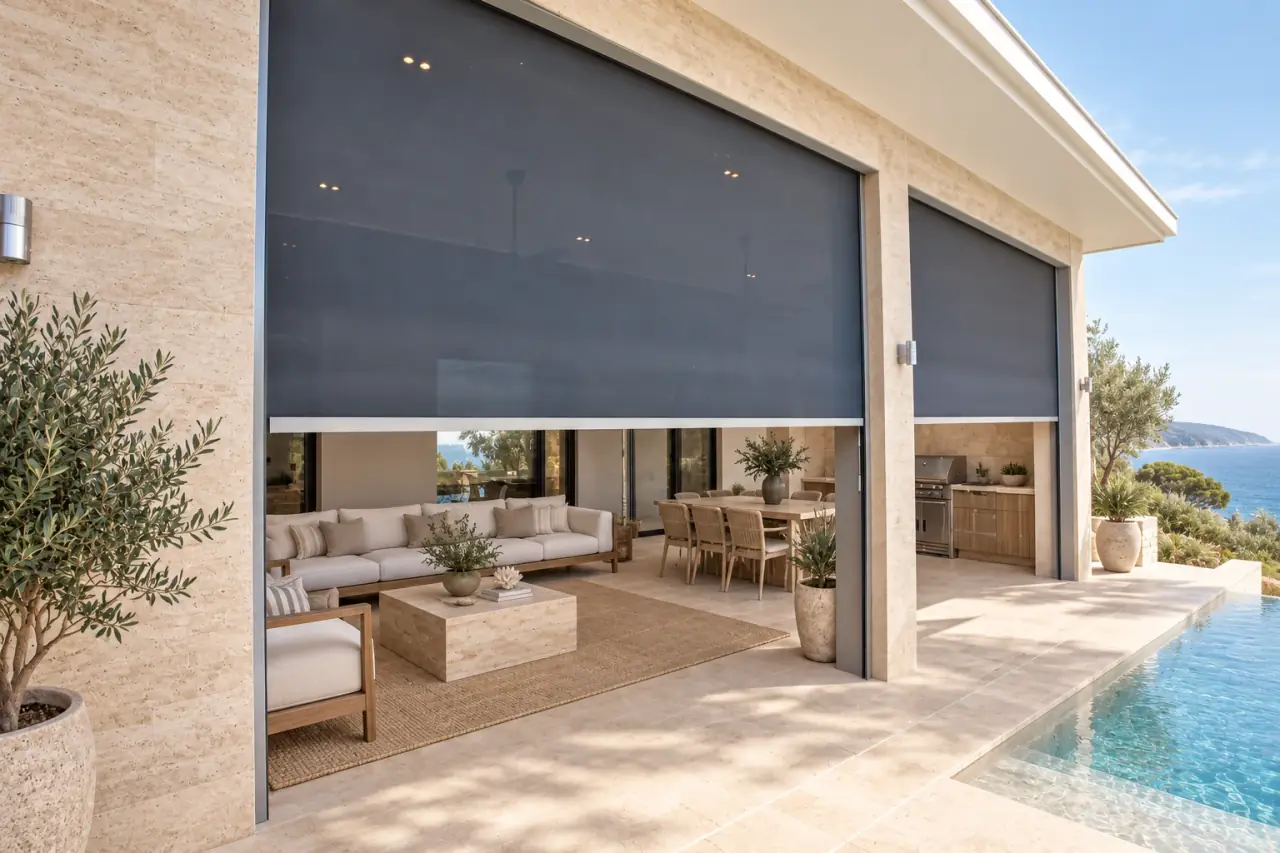
Control low-angle sun, soften the breeze and create a more private outdoor room with guided vertical fabric screens.
A zip-guided edge holds the fabric within side channels. Openness and color influence visibility, glare and privacy. Wind performance depends on the model, screen size, fixings and exposure; a zip screen is not a storm shutter or a substitute for structural glazing.
Dimensions, load ratings, waterproofing, motor compatibility and warranty must be confirmed for the selected model and installation.
Compare the systems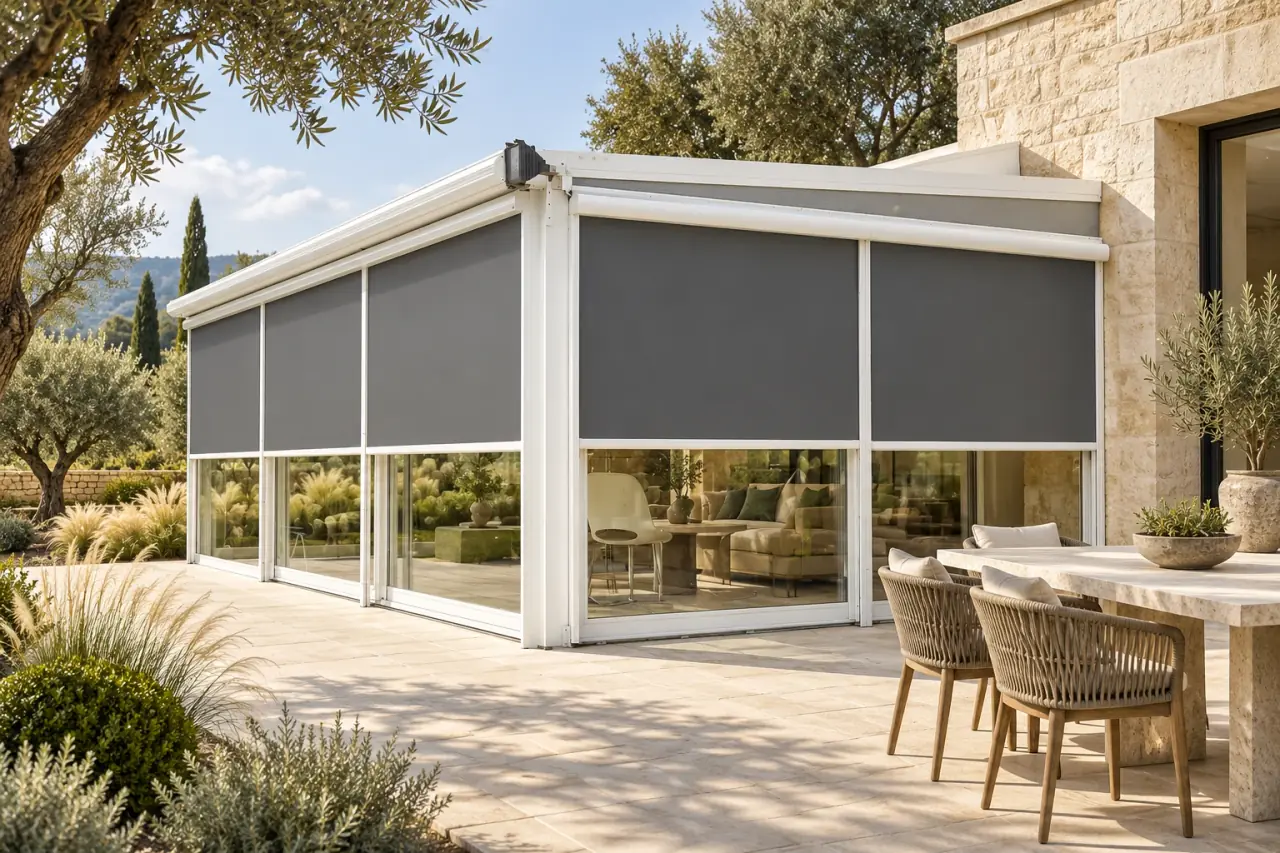
Use these points to build a specification for your site. Confirm the final model, options and installation drawings together.
Compare the exact fabric and color under daytime and evening lighting. Openness describes the mesh, while privacy and glare depend on the whole setting. Ask for solar and optical data for the chosen reference rather than transferring a number from another fabric.
Check the opening at several points and confirm a suitable fixing surface for both guides. Coordinate the headbox with door swings, handles and maintenance access. The bottom bar and floor interface should be shown on the installation drawing.
A useful test report identifies the tested dimensions, fabric, guide system, mounting and pressure or wind classification. Confirm how that configuration relates to your opening. Wind resistance is not a promise of storm protection, airtightness or structural security.
Choose a retractable canopy when an open sky is your priority. Consider a louvered pergola when adjustable light and an architectural roof matter more. Add side screens for low-angle sun and privacy.
Yes, compatible systems can combine overhead shade and side screening. Check the frame interfaces, drainage, wind exposure and electrical requirements together before confirming the design.
No universal rating applies. Performance varies by model, size, fabric, drainage and installation. Ask for the selected model’s documentation and follow its operating limits.
A useful project brief includes site photos, approximate dimensions, location, intended use and any building constraints. These details help narrow the right system before a final site survey and specification.
Tell us about your space. Start with an idea, a few measurements, or simply a question.
Plan your space