
The direct answer
Choose zip screen fabric by viewing samples in the actual light conditions, then checking the exact reference against your screen system. Openness, colour and lighting affect the experience together. A daytime privacy impression does not guarantee privacy when the interior is brightly lit at night.
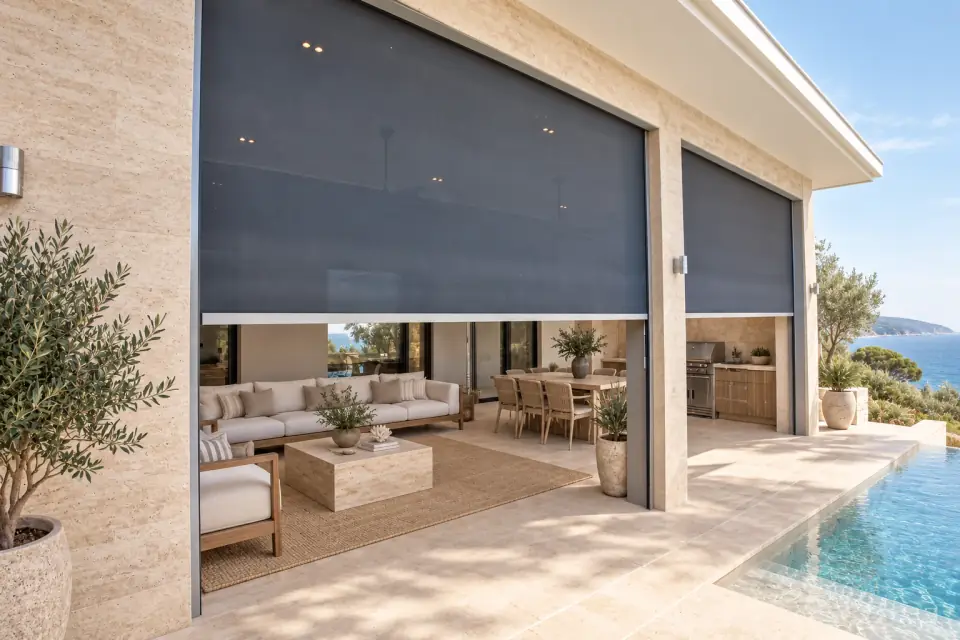
Start with the view you want to keep
Compare samples from your normal seated and standing positions, looking both outward and inward. Ask the supplier to identify the openness of each sample rather than choosing by a photograph. Record which option best balances outward view and glare for the relevant time of day.
Request the exact fabric data
Ask for the fabric collection, colour code and relevant technical sheet. An openness percentage describes openings in the fabric; it is not interchangeable with a heat-reduction percentage or a system wind rating. If a performance claim matters to your purchase, ask which test and configuration it refers to.
Coordinate fabric with the hardware
Confirm that the proposed fabric is compatible with the specified tube, motor, guides and opening size. Ask whether seams will be visible and where they will sit. Show door handles and drainage details on the installation drawing, and keep access to the headbox available for future servicing.
Approve a sample, then keep its reference
Record the approved sample reference in the order, including the frame finish and motor choice. If ordering multiple screens, identify each opening separately. Ask how a later replacement fabric would be specified and whether a new sample should be reviewed, rather than assuming a future batch will look identical.
Before you request a quotation
- Samples checked from both sides by day and at night
- Fabric reference linked to the exact screen configuration
- Opening IDs, seam positions and access recorded