
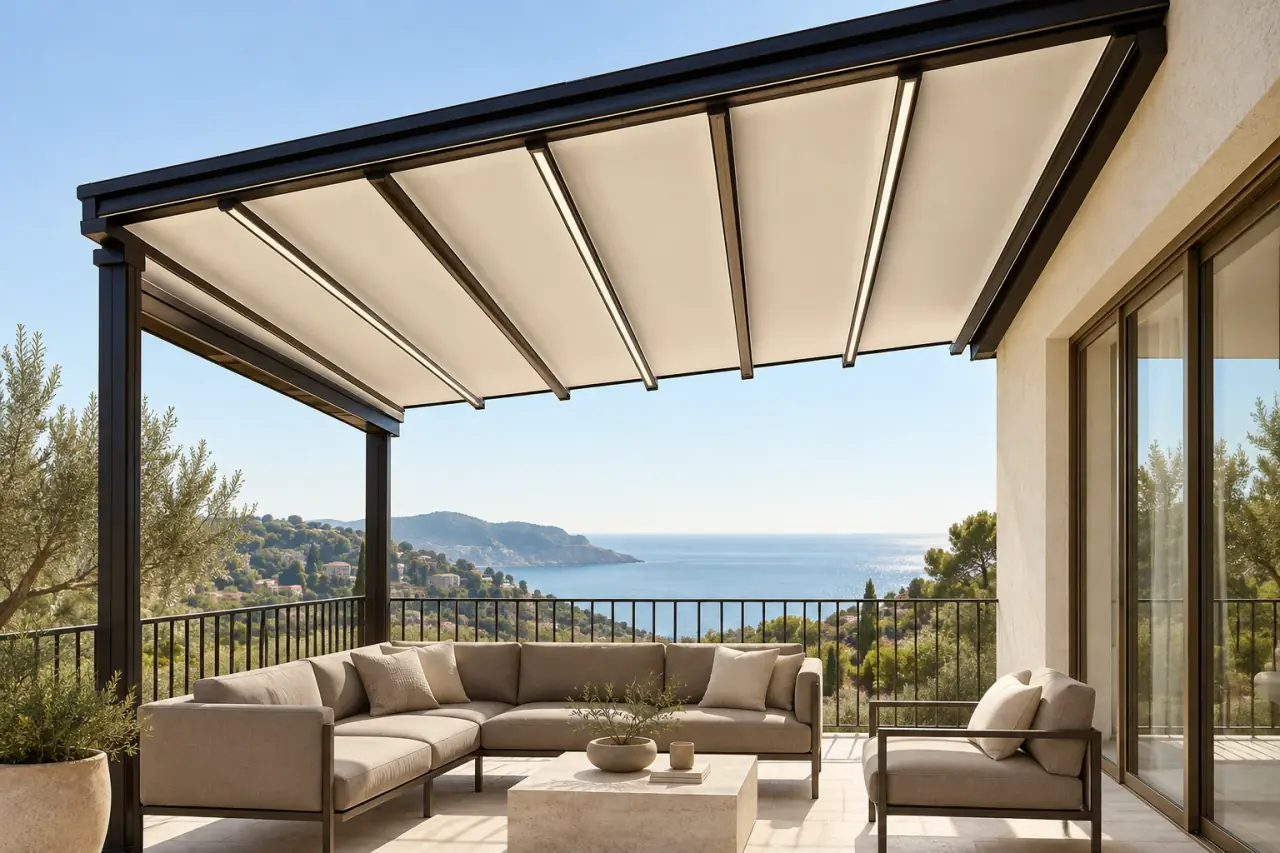
Want to open the terrace to the sky when you do not need shade? Consider a retractable fabric canopy. If you prefer to adjust the sunlight through a roof that stays in place, compare louvered pergolas. Side screens can help with low evening sun and privacy.
Begin with the sunlight
Check where the sun falls in the morning, at midday and later in the afternoon. A roof provides shade from high sun, while a side screen may be more useful for low sunlight entering the seating area. Mark the windows and views you want to keep clear before deciding where the shading should go.
Explore this topic: West-facing terrace shade: plan for the hours you actually sit outside
Compare the complete system
Compare the frame, roof, drainage, fixings and controls as a complete installation. Ask for the operating limits and installation requirements of the exact model being quoted. Fabric and louvered systems differ between manufacturers and configurations: wind or rain performance stated for one product does not establish the performance of another.
Plan for the way you live
Allow for chairs pulled back from the table and for people moving around lounge furniture. Decide where the posts will sit, how the roof will meet the building and where rainwater will drain. Once these details are settled, consider lighting and automatic controls that suit the way you will use the space.
Explore this topic: Pergola Dining Layout: Tables, Seating and Lighting
Compare what happens when you open the roof
Tilting louvers change their angle while remaining above the terrace. Retractable fabric gathers at one end, leaving the rails and frame in place. Retractable louvers are a third arrangement: the blades move together towards one side. These differences affect the view from indoors as well as the feeling beneath the roof. Ask to see the same system open and closed; two attractive photos of different products are not a useful comparison.
Choose for your most-used seat
For a table beside the kitchen, access and shade during meals may matter most. For a sofa facing the garden, the front opening and late-afternoon sun may decide the layout. Mark those seats first, then the posts and optional screens. A larger roof is not automatically more comfortable if it puts a post in a doorway or darkens a room you use every day.
Example: a dining terrace beside the house
Start with the table in its normal position and pull the chairs out as if people were sitting down. Mark the route back to the kitchen. If midday sun is the main problem, compare overhead systems without adding side screens immediately. If the evening sun comes under the roof, assess a screen on that particular side while keeping the route indoors open. Next, compare the roof when open: rotating louvers stay overhead, while retractable fabric gathers at one end. Check how each affects light through the adjacent windows. You now have a useful brief: a shaded dining area, an unobstructed serving route and a chosen degree of openness. Only then decide the frame colour, lights and controls. This sequence makes the choice easier than starting with a list of accessories.
Compare the structure left behind
Start with the opening you want, rather than a product name. A wall-mounted awning can leave the front edge free of posts, while a canopy on posts retains a fixed frame that may also support side screens. Neither arrangement is automatically better. Sketch the furniture and sightline from inside the house, then compare the frame that remains when each roof is open. This makes the choice about how the space works, not just how much shade is quoted.
Check the complete operating sequence
Review the proposal in the positions people will actually use: fully open, partly open and closed. Check what remains in the opening, where moving parts travel and whether someone can still reach the controls. Agree who demonstrates normal operation at handover and how the owner obtains the instructions for the supplied motor and accessories. A useful demonstration includes stopping midway and operating each zone separately. Record any limitation against the relevant component rather than relying on a general promise that the whole installation is automatic or suitable for every weather condition.
Compare what stays overhead when the roof opens
Ask for an open-position drawing before comparing prices. Rotating louvres leave the blades in the frame; a retracting system needs space for the gathered roof. Mark that remaining area above the terrace and check the view from the room behind it. If daylight is your main reason for choosing a moving roof, compare these two positions from indoors as well as from the garden. A larger nominal opening is not a substitute for checking where the frame and roof actually sit.