
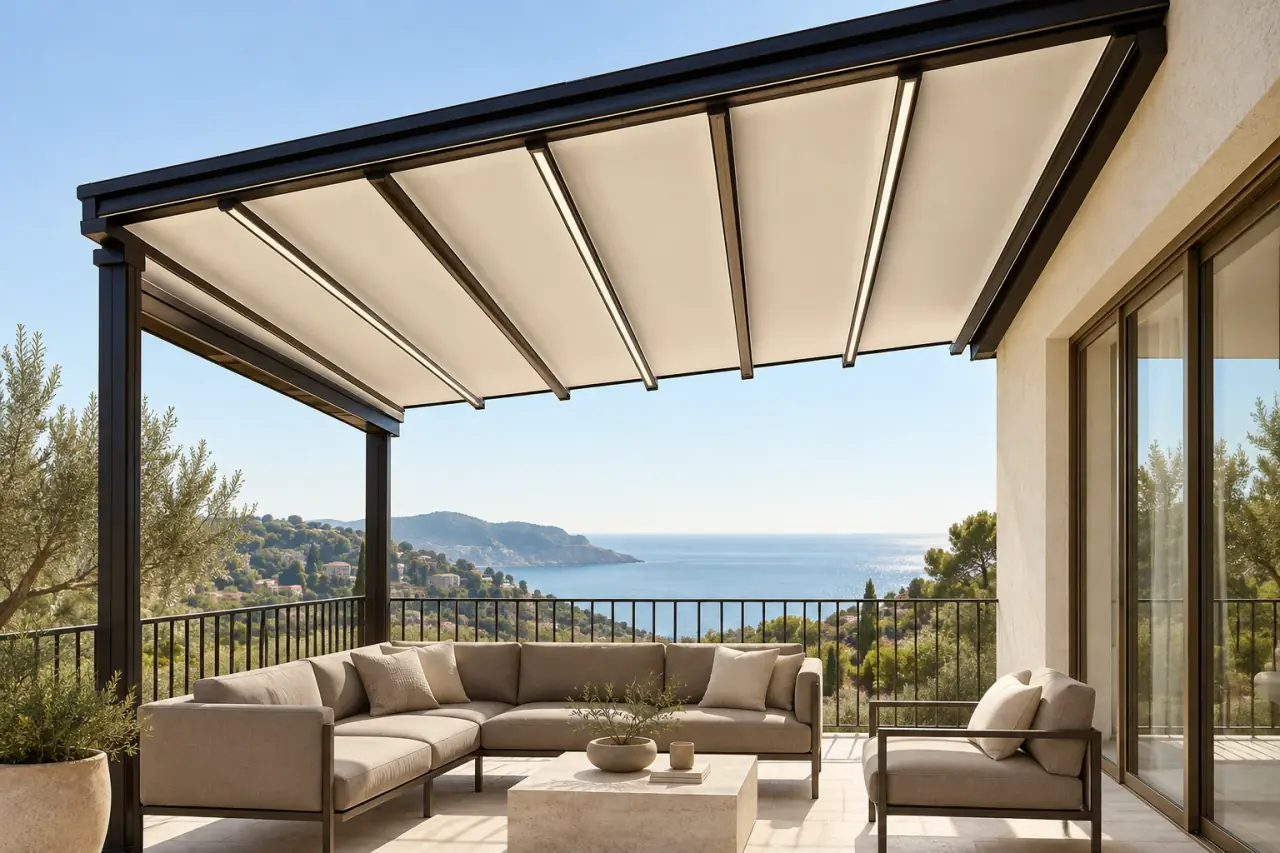
A roof can look generous on a plan and still leave the dinner table in direct afternoon sun. For a west-facing terrace, start with the time you want to use it, the direction of incoming light and the view you want to keep. Compare the roof and any side shading as a complete layout before deciding that a deeper canopy is the answer.
Make a short record of the afternoon sun
Take photographs from a fixed position over the hours when the terrace is uncomfortable. Note the date, approximate time and the position of the table, sofa or screen you want to use. Include the room behind the terrace if glare indoors is part of the problem. This is a practical brief, not a professional solar study, but it is more useful than a single midday photograph. For a project still under construction, ask the designer how seasonal sun positions will be assessed. Do not assume that an observation made in one month describes the whole year.
Separate the roof footprint from the shade you need
Draw the intended seating area inside the available terrace, then discuss the roof height and projection with the supplier. Ask to see the likely relationship between the sun direction and the occupied seats, rather than accepting a top view alone. If the issue is sunlight reaching eye level from the side, include a vertical shading option in the comparison. A longer roof changes the structure and the appearance as well as the coverage, so it should be evaluated as a new configuration. Keep doors, post positions and the route to the garden visible on the same drawing.
Why orientation belongs in the brief
The US Department of Energy identifies excess heat and glare as concerns with east- and west-facing windows. Site conditions still need individual assessment.
Compare options from inside the house as well
Review the proposed layout from the living-room sofa and any nearby worktop or desk. Ask where the retracted fabric, cassette and roof beams will remain in the view. If you want to uncover the terrace outside the hottest hours, confirm the actual open position rather than relying on a generic product photograph. Compare two or three arrangements with the same seating plan. One might prioritise an unobstructed outlook, another afternoon protection. Giving each option a clear purpose makes the choice more useful than selecting the largest structure that fits the wall.
Explore this topic: Shading outside glass doors: keep the room bright, shade the terrace
Choose side shading without enclosing every view
Identify the side that causes the discomfort and ask whether it can be controlled independently. Keep the main view and a practical entrance in the layout. If a ZIP screen is proposed, review fabric samples at the troublesome time of day and confirm the exact dimensions and supporting details. Ask what the screen changes when fully lowered, including how people move between the terrace and garden. Do not treat side shading as an automatic weather enclosure. Its suitability, operating limits and relationship to the roof must be confirmed for the selected system.
Explore this topic: What to know before choosing zip screens
Ask for a comparison you can actually decide from
Send the time-stamped photographs, a dimensioned sketch, the seating plan and your two main priorities. Request a base roof option and, if relevant, an alternative with targeted side shading. Have the supplier show changes in frame dimensions, controls, fixing requirements and price separately. Do not turn an illustrative shadow into a guaranteed result, or a general energy-saving statement into a promised reduction in your electricity bill. Before ordering, agree what still needs a site check and who will perform it. The aim is a documented choice for your terrace, not a universal west-facing package.
Could moving the table avoid a larger roof?
It is worth comparing before committing to new dimensions. Mark an alternative seating position on the same plan and check it during the relevant hours. Keep the normal route from the house, the space used by pulled-out chairs and the garden entrance in the comparison. A position that looks shaded but blocks the main door is not a useful solution. If furniture movement cannot solve the problem, the exercise still helps define the area that needs protection. Give the supplier both layouts and ask which differences affect the proposed roof and side shading, rather than starting the enquiry again from an unrelated photograph.