
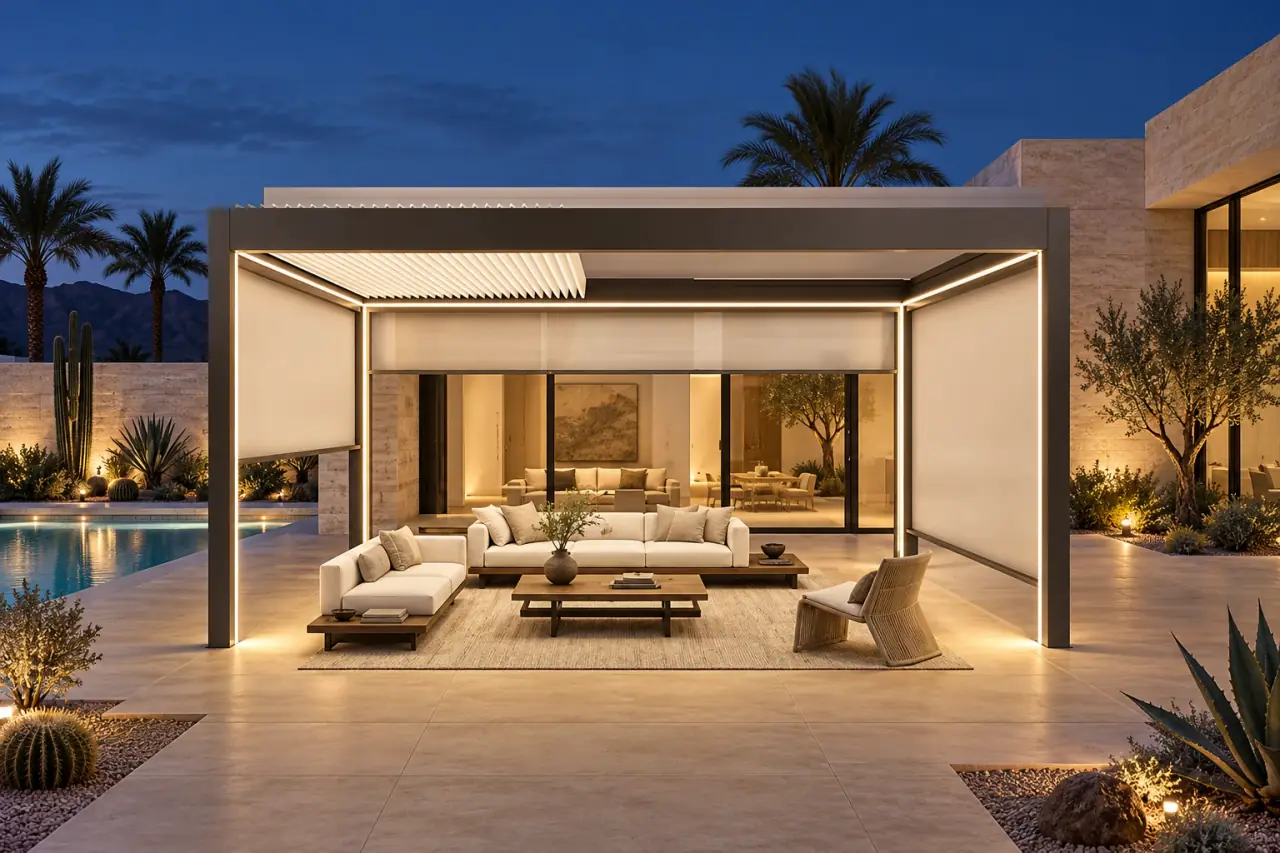
A bright outline around a pergola can look impressive in a photograph without giving useful light at the table. Begin with the activities beneath the roof and the view from each seat. Then decide which lights should work together, which need separate control and where their equipment can be serviced. The result should be a usable evening space, not simply the longest possible LED strip.
Describe the evening before choosing the fittings
List the ordinary uses of the terrace: eating, talking on the sofa, finding the garden path or clearing the table after guests leave. Mark the furniture and the main route on a plan. Ask the supplier to explain what each proposed light contributes to those tasks. A decorative roof line may be one part of the arrangement, not the whole lighting plan. Keep the discussion specific to where people sit and move. You can then compare a simple package with a more flexible one without assuming that more fittings automatically mean a better result.
Look at the light from a seated position
Review a demonstration or sample from dining-chair and lounge-seat height, not only while standing beside the structure. Look towards the opposite seat, the house windows and the garden. Explain where an exposed source or reflection feels distracting and ask what adjustment is possible in the proposed fitting. Include both roof-open and roof-closed views if those positions will be used at night. Photographs can support the discussion, but automatic exposure and a carefully chosen angle may hide discomfort. The important comparison is the experience from the places your family or guests will actually occupy.
Use an established outdoor-lighting reference
DarkSky and IES recommend purposeful, directed, restrained and controlled outdoor lighting, favouring warmer colours where possible. These are planning principles, not certification of this product.
Make dimming and separate zones explicit in the order
Do you want the dining light on while the lounge is dimmed, or a short evening setting followed by everything off? Describe those actions before selecting a controller. Ask which supplied lights and drivers support the requested behaviour and whether it requires additional equipment. Distinguish switching from dimming, and an ordinary remote from an app or timer. Write down what is included rather than relying on the label smart lighting. If more than one person will use the space, request a simple demonstration of everyday operation and how to leave the installation in its intended off state.
Coordinate lighting with the moving roof and future maintenance
Have the supplier show the proposed cable route, power equipment and accessible service locations before the roof order is finalised. Ask how the arrangement relates to moving components, side-screen fittings and drainage details. Outdoor electrical suitability and installation requirements need confirmation for the actual equipment and site by the responsible qualified installer. Do not infer them from a promotional picture or from the presence of an LED strip. Keep the equipment references in the handover pack and ask how a failed component can be reached later without assuming that every replacement will be a simple user task.
Review the finished scene from the garden and neighbouring boundaries
At handover, walk the ordinary route between the house, seating and garden and review the lighting settings that were agreed. Look back towards the pergola as well as out from it. Note unnecessary spill towards neighbouring windows or a view you wanted to keep dark, then discuss adjustments within the supplied system. Keep the final settings and operating instructions with the order. For a restaurant, involve the staff member responsible for closing the terrace. A carefully agreed everyday setting is more valuable than an impressive demonstration mode that nobody knows how to change or switch off.
Explore this topic: ZIP screen privacy at night: can people see through?
Is choosing a warm colour temperature enough?
Keep colour preference in the specification, but review the complete arrangement as well. Ask to see the actual fitting, its location and the controls supplied with it. Compare the dinner setting and the quieter setting you expect to use later, rather than choosing from a colour label alone. Make sure an agreed sample or equipment reference is recorded so a different fitting is not substituted without discussion. If your quotation lists only metres of strip and a colour temperature, ask what else defines the installation: its purpose, positioning, control and access. Those answers make the offer easier to compare and the finished system easier to use.