
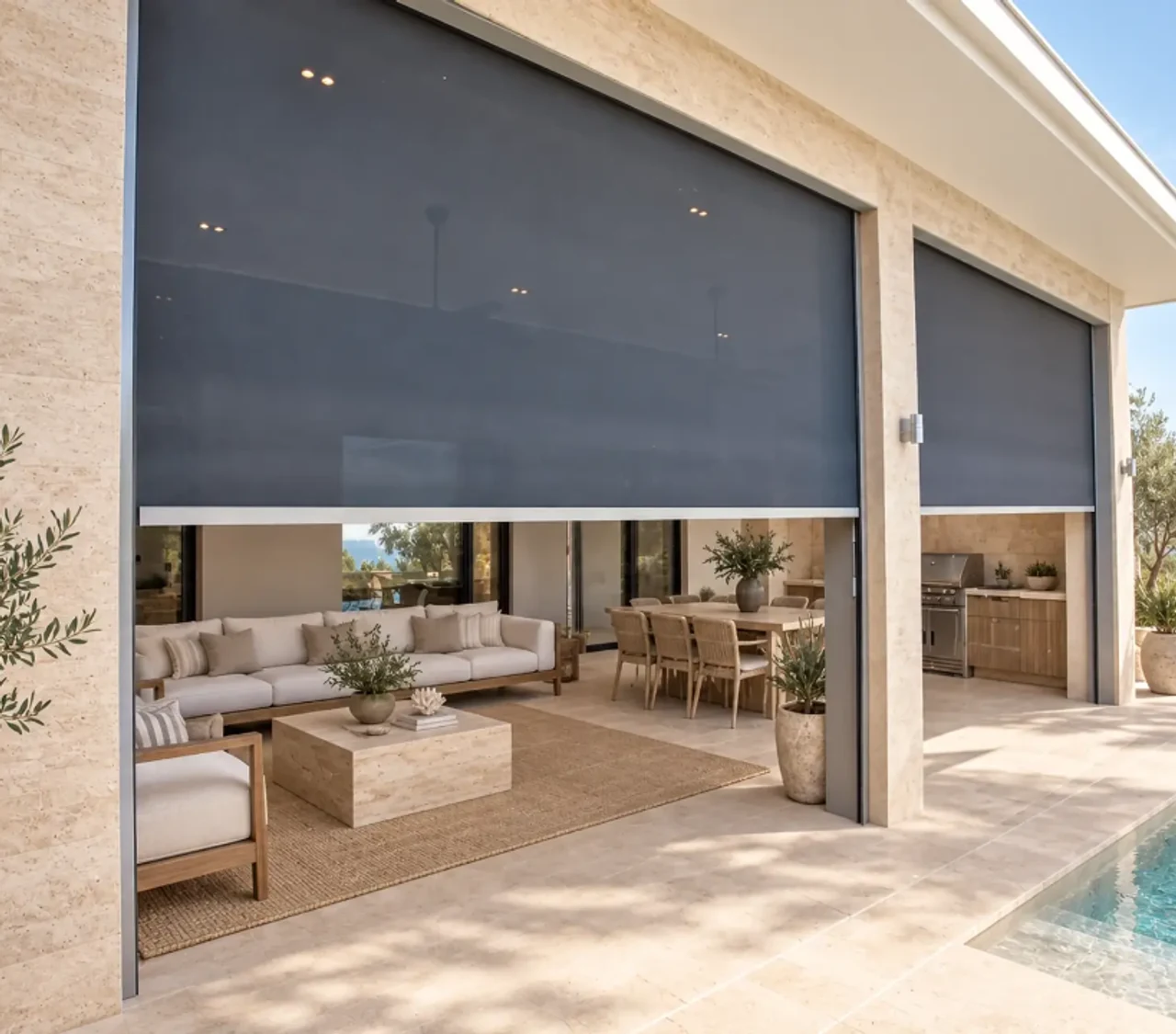
A screen that feels private over lunch may look quite different when the terrace lights come on. Before choosing a fabric, decide whether you want to soften the sun, preserve the view or prevent people outside from seeing a lit seating area. These are different requirements. A good quotation should explain which of them the proposed fabric and installation can meet.
Start with the view you want to block
Stand at the places that matter: the pavement, a neighbouring entrance or the garden path. Then look towards the seats with the usual evening lights on. Include nearby windows and doors in this check; covering the front opening may leave a clear view through the side. Mark the concern on a simple plan rather than writing only “privacy required”. A photograph taken from each relevant position gives the supplier a clearer brief. Keep the discussion about the actual view into your space, not a general promise that a fabric is private.
Compare samples after dark, not just in a showroom
Ask for samples identified by fabric series, colour and openness, and compare them in the same position. Assess them both from your seat and from outside. Include the lighting you genuinely expect to use, such as a dining pendant or bright kitchen behind the terrace. A small sample helps narrow the choice, but it cannot demonstrate the complete opening or side gaps. If nighttime privacy is essential, ask how a larger sample or a comparable completed installation can be reviewed before approval. Record the chosen reference so the delivered fabric can be checked against it.
Explore this topic: How to compare ZIP screen fabric samples on your terrace
What the fabric guidance actually says
Phifer notes that indoor lighting can allow people to see in at night. Its daytime privacy guidance is not a nighttime guarantee.
Check the whole opening, including the edges
Ask for the headbox, guides and bottom-bar positions on the installation drawing. Identify the finished floor level and any slope, threshold or change in paving beneath the screen. These details help establish what remains visible around the perimeter. Do not ask the installer to remove necessary movement clearances merely to make a drawing look sealed. Instead, have the supplier explain the intended gaps and how they affect your requirement. Review adjacent openings at the same time, particularly where two screens meet at a corner or one side is left open for access.
Agree the trade-off before choosing a darker or denser fabric
Write down what you are willing to change: the view from the dining table, the amount of daylight or the treatment of one particular side. Do not assume that selecting the darkest colour resolves every privacy concern. Ask whether an alternative fabric is approved for the exact screen dimensions and hardware, rather than substituting a material by appearance alone. If the proposed system cannot meet the nighttime requirement, discuss a separate privacy treatment for the relevant opening. Keep access and normal operation in the brief; a satisfactory evening arrangement must still work during the day.
What to put in the quotation and handover record
Include the viewing directions, intended evening lighting, selected fabric reference and agreed limits. Describe the requirement in ordinary terms, such as whether people on the path should be able to distinguish the seating area, rather than using an undefined label like total privacy. At handover, review the installed screens under the agreed conditions and record any unresolved difference. A phone photograph is helpful evidence of position and lighting, but automatic exposure can change how a scene appears; review the space with your own eyes as well. Keep the drawings and approved sample together for later service enquiries.
Should I order the least open fabric straight away?
First ask what problem that choice solves in your particular opening. You may be satisfied with screening one direct sightline while keeping the other side open, or you may need a different treatment because you want both a clear daytime view and strong nighttime separation. Ask the supplier to assess the proposed fabric and perimeter details together, with the evening lighting stated in your brief. Treat an openness number as one selection detail, not a complete acceptance condition. If the supplier cannot demonstrate the result you need, keep the decision open until the alternatives and their limits have been explained.