
The direct answer
Choose a retractable canopy by the way you want to use the space, then verify the complete roof system. Solar mesh, rain-protection fabric, seams, roof fall and drainage must be considered together. A fabric specification alone does not establish how the installed canopy will handle rain.
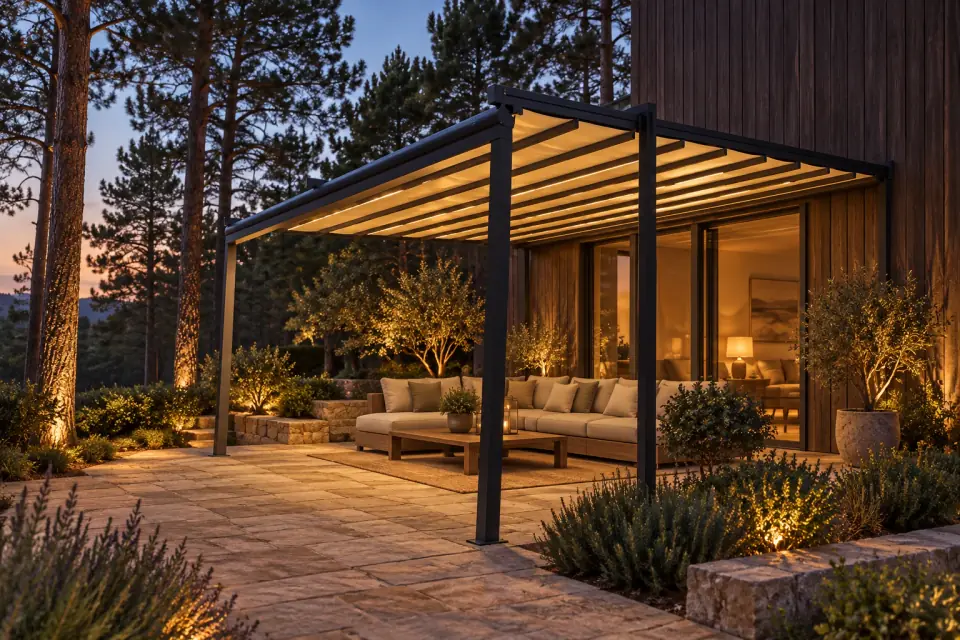
Separate shade from rain protection
Write down whether you need filtered daylight, a more opaque roof or a specified rain-protection system. Ask for the exact fabric reference and a physical sample. Review how joins and perimeter details are handled; a fabric advertised as waterproof does not describe every connection in a completed installation.
Check the roof when it is retracted
Ask for a drawing showing both the extended roof and the folded fabric stack. Check the remaining sky opening, door clearance and access to the motor. A canopy that fits the overall patio dimensions can still conflict with a window, light fitting or maintenance route when folded.
Follow water to its final outlet
Confirm the required fall for the selected system and identify where gutters discharge. Include the wall junction and the receiving ground drainage in the drawing. Ask the installer how they will inspect these interfaces at handover; avoid leaving water discharge beside a doorway or across the main circulation path.
Agree how the system is operated
Request model-specific instructions for rain, wind, frost and loss of power. Confirm whether sensors are included and how manual commands interact with them. Keep the instructions available to everyone using the canopy. Choose a service arrangement that explains how fabric, carriers and motors can be accessed or replaced.
Before you request a quotation
- Fabric reference, sample and intended use
- Extended and retracted roof drawings
- Drainage route and operating instructions