
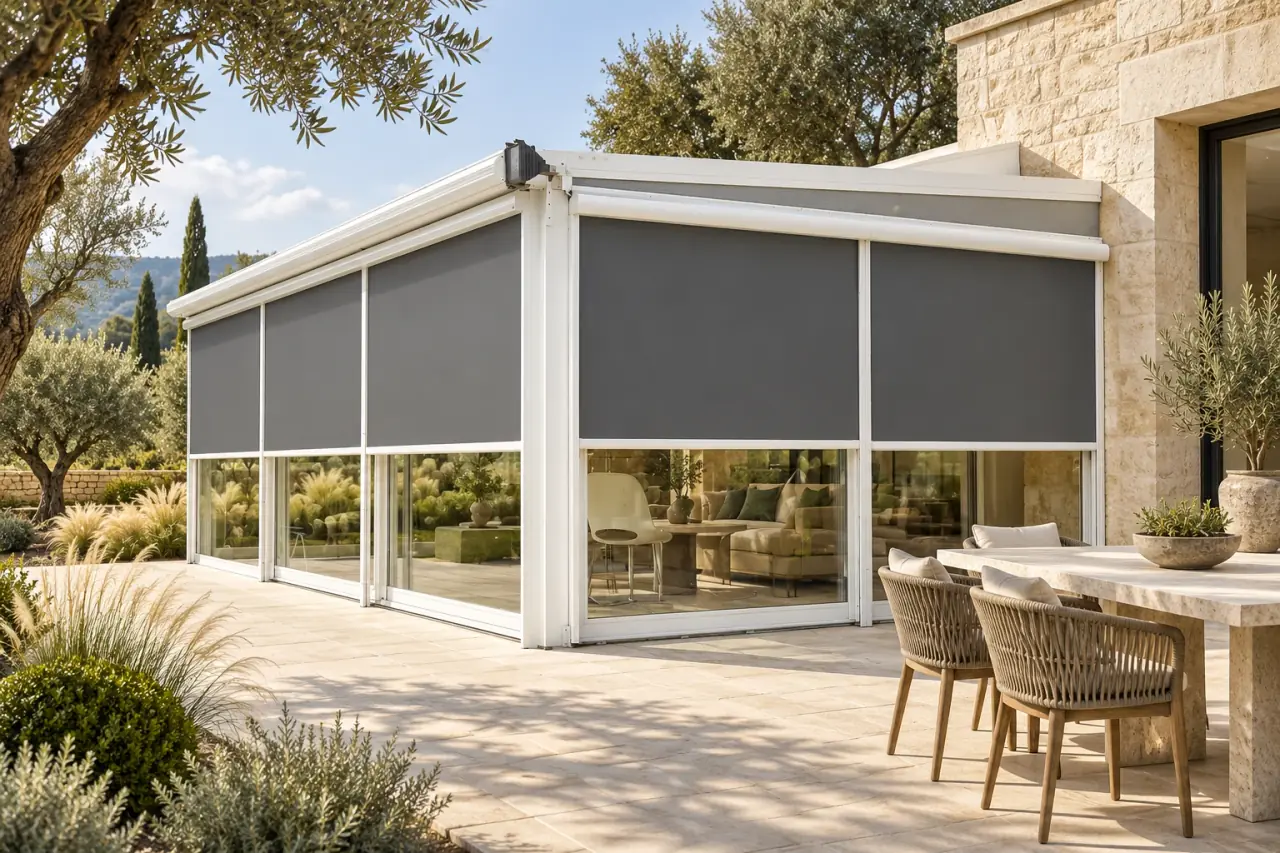
A zip screen is a guided vertical fabric shade. Choose the fabric and mounting method around sun direction, desired privacy and the actual opening. Confirm the model’s tested performance before relying on wind resistance.
Will the screen still give you privacy after dark?
Before you order, check the view from outside with your usual evening lights on. Phifer notes that indoor lighting can make a screened room visible from outdoors at night. That explains a limitation of screening; it does not establish a privacy rating for our ZIP systems. Tell the supplier where people might look in, ask for the fabric reference, and agree how to assess a sample in those conditions. A showroom display beside a bright window tells you little about the view from a dark garden towards your dining table. Keep the approved sample details with your order and write down the lighting and viewing positions you agreed to check.
Explore this topic: ZIP screen privacy at night: can people see through?
How much can you see through the fabric?
A more open mesh typically allows more view through the fabric. Privacy also changes with lighting: a screen that feels private by day may reveal the interior when it is brightly lit at night. View physical samples in both conditions.
Measure the opening and the supports
Measure width at the top, middle and bottom, and height on both sides. Check whether the supporting surfaces are square, level and suitable for fixings. Allow space for the headbox, side tracks and maintenance access.
Explore this topic: Adding ZIP screens to an existing pergola: what to check before a quote
Ask for operating limits
Request the operating instructions for the specific screen size and exposure. Ask how wind sensors interact with the motor and what to do during severe weather. Do not treat a fabric screen as a load-bearing wall or security barrier.
Measure the screen and its surroundings
Take the opening width at the top, middle and bottom, and note any differences rather than averaging them. Photograph both side supports and the ceiling area where the box would sit. A beam, light or door handle can change the mounting position even when the opening looks rectangular. These measurements help an initial discussion; the installation drawing should establish the final product size and fixing locations.
Decide how the balcony works with the screen down
Check whether the lowered screen crosses a door, watering route or storage area. Furniture and planters must stay clear of its movement. If two screens meet at a corner, discuss their guides and bottom bars together. Keep a convenient way back indoors; a motorized screen should not turn the normal route through the balcony into a repeated operating task.
Example: two openings beside a garden door
Give the two openings separate labels and measurements, even if they look identical. Mark which one is used as a doorway and which sits behind a sofa. On the seating side, compare fabric samples for glare and the view outside. On the doorway side, consider how often people pass through and whether a lowered screen would interrupt that route. Show the headboxes and both sets of guides on the drawing, particularly if they meet at a corner post. Ask how each screen is controlled and which controls remain reachable from the usual entry point. Finally, review the raised position: the fabric may be out of the way, but the box and guides remain. This catches practical problems that a front-on photograph of the lowered screens can hide.
Plan the bottom edge and access together
Before ordering, mark the finished floor level beneath the entire screen. A change in level across the opening can affect how the bottom bar meets the floor. Show door thresholds, drainage channels and furniture that might obstruct movement. If people regularly pass through this side, discuss whether a different opening arrangement is more practical than raising the screen each time. Treat the screen as part of the balcony layout, not simply an accessory attached at the end.
Evaluate a fabric sample in the actual opening
Compare samples from the same position, at the time of day when glare or privacy matters most. Look both outwards and inwards; a fabric that looks opaque on a table may appear more transparent against a bright background. Repeat the comparison with the room or terrace lights on. Keep the fabric reference and colour with the approved sample, and distinguish the fabric specification from the performance of the complete screen assembly. Ask which characteristics are documented for the chosen combination of fabric, guides and dimensions before using it as a specification for the order.
Explore this topic: How to choose zip screen fabric for shade and privacy
Read openness and thermal performance separately
Phifer distinguishes fabric openness from solar heat gain coefficient (SHGC), which describes solar heat passing through a window-and-shade combination. A 1% openness fabric is therefore not evidence of 99% heat rejection. For a ZIP screen quotation, request the exact fabric reference, colour and available optical data. Compare samples at the intended viewing distance and with the glazing that will actually be used. Record whether the priority is glare control, outward visibility or reduced solar gain; a single openness number cannot settle all three. Data for an interior shade should not be presented as a tested result for an exterior ZIP assembly.