
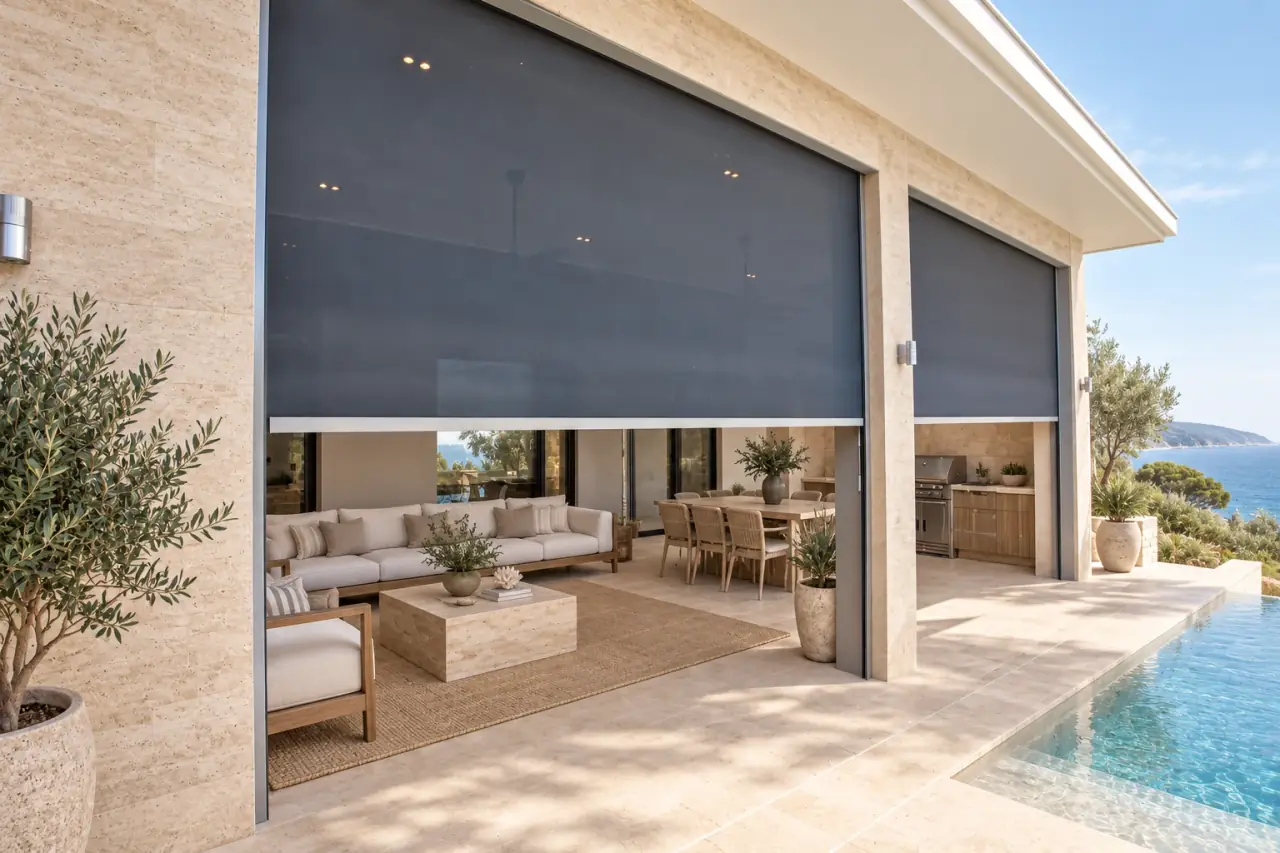
A fabric that looks right on a sample card can feel very different across the front of a terrace. Before choosing a colour, decide what you want to see through the screen and what you want it to hide. Compare samples where the screen will actually sit, with someone looking from the other side. A few deliberate checks are more useful than choosing from a photograph taken in unknown lighting.
Keep the comparison fair
Label each sample with its manufacturer, range, colour and stated openness. Hold the candidates in the same plane and view them from your usual seat, keeping their orientation consistent. Compare them close together in time so changing sunlight does not decide the result. Note whether the garden remains clear, whether bright sky is distracting and whether the fabric itself dominates the view. Keep photographs as a record, but make the decision by looking directly through the material.
Repeat the test after dark
Mesh screening can improve daytime privacy without providing the same effect after dark. When the terrace is lit and the garden is dark, the view inward can change. Switch on the lights you normally use and look from the relevant outside position. Test the dining seat, sofa and doorway separately. If privacy at night is essential, ask to see a suitable complete installation before approving the fabric; a small swatch cannot demonstrate the whole opening.
Use openness as one part of the decision
Ask for the data sheet for the exact fabric and colour being quoted. Openness describes the weave; it is not a single score for privacy, shade and comfort. Compare the supplier’s stated optical properties alongside your observations. Do not assume that two fabrics with the same openness will look identical, or that a fabric described as private will suit every lighting condition. Keep the chosen colour code attached to the quotation so a later substitution is not treated as equivalent automatically.
Record what you have actually approved
Keep the selected sample and a short record of the test location, time and lighting. Separate visual preferences from performance requirements: “clear view of the garden from the table” is an observation, while a required product rating needs documentation. Ask the supplier to confirm compatibility with the proposed ZIP system and the size of the finished screen. Before ordering, review the headbox, guides and bottom bar as well as the cloth; those parts determine how the complete installation fits the opening.
Explore this topic: Adding ZIP screens to an existing pergola: what to check before a quote