
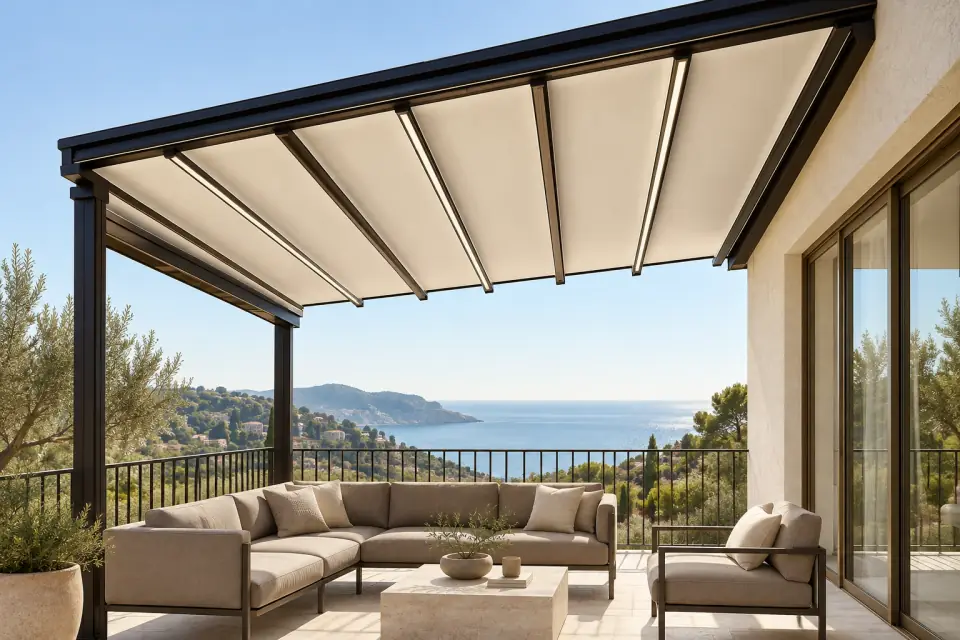
Start with the function of the fabric
Specify the fabric reference, color, light transmission and seam layout. A mesh that filters sunlight and a membrane intended for rain protection serve different purposes. Review a physical sample and the complete roof construction before deciding.
Compare the same reference and color
Compare the exact fabric and color under daytime and evening lighting. Openness describes the mesh, while privacy and glare depend on the whole setting. Ask for solar and optical data for the chosen reference rather than transferring a number from another fabric.
Choose a finish for your location
Confirm the frame material, coating, colour code and cleaning method. Tell us if the installation is near the coast or in an industrial area, so the finish and care requirements can be discussed for that location. Compare a physical sample before confirming the colour.
Coordinate the complete palette
Review frame, fabric, guide and accessory samples together under the expected lighting. Record the approved references and whether surfaces are smooth, textured or metallic. For coastal or industrial exposure, ask the supplier to confirm the treatment and cleaning regime appropriate to that location in writing.
Compare samples where they will be used
Place the proposed fabric beside the frame finish, paving and cushions. Look from above and from the seated side, in direct light and in shade. A colour that looks warm on a small screen may appear quite different across a large overhead surface. For side screens, also look through the sample towards the view: colour, openness and the difference in light on either side all affect the experience.
Keep the chosen combination identifiable
Keep the fabric range and colour reference together with the frame finish and any contrasting guide or accessory colours. These details make it easier to discuss a matching addition or replacement later. Ask which parts can be replaced separately on the selected model. A familiar brand name alone does not identify the fabric, and a shared colour name does not guarantee the same appearance across different materials or suppliers.
Keep material identity with the finished product
Record the frame finish and fabric reference separately, including the approved colour and any stated care instructions. A photograph cannot reliably identify a coating or weave after installation. If an alternative material is offered, compare its product sheet and intended application instead of approving it because the colour looks similar. Keep a sample or reference record with the order so future maintenance and replacement discussions start from the material actually supplied, not from a general marketing description.
Evaluate a fabric sample in the actual opening
Compare samples from the same position, at the time of day when glare or privacy matters most. Look both outwards and inwards; a fabric that looks opaque on a table may appear more transparent against a bright background. Repeat the comparison with the room or terrace lights on. Keep the fabric reference and colour with the approved sample, and distinguish the fabric specification from the performance of the complete screen assembly. Ask which characteristics are documented for the chosen combination of fabric, guides and dimensions before using it as a specification for the order.
Read openness and thermal performance separately
Phifer distinguishes fabric openness from solar heat gain coefficient (SHGC), which describes solar heat passing through a window-and-shade combination. A 1% openness fabric is therefore not evidence of 99% heat rejection. For a ZIP screen quotation, request the exact fabric reference, colour and available optical data. Compare samples at the intended viewing distance and with the glazing that will actually be used. Record whether the priority is glare control, outward visibility or reduced solar gain; a single openness number cannot settle all three. Data for an interior shade should not be presented as a tested result for an exterior ZIP assembly.
Confirm the finish beyond its colour code
QUALICOAT publishes requirements covering coating equipment, coating materials and finished architectural products; meeting its requirements is a condition for its quality label. A colour swatch alone does not establish that status. When comparing quotations, request the coating system, preparation process, finish sample and relevant documentation for the offered supply. If a quality label is claimed, ask for the applicable licence and its scope. For a coastal installation, describe the exposure when requesting a finish recommendation and maintenance instructions. This reference explains what to verify; it is not a claim that JYAVENRO or a particular supplied finish holds a QUALICOAT licence.