
At a glance
On a narrow balcony, the box and side guides deserve as much attention as the fabric. Start with the opening, door movement and furniture. Then decide which side needs shade, rather than enclosing every side by default.
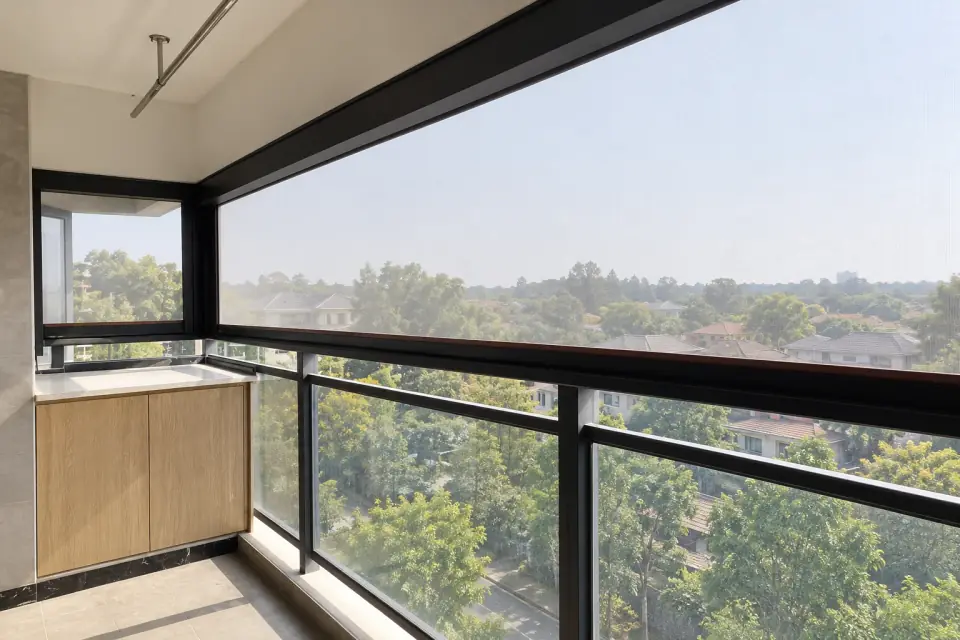
Measure the opening, then check the obstacles
Record the width and height of the opening and photograph it straight on. Include drainpipes, door handles, lights and any ceiling beam. These details help place the box and guides. If the two sides differ, show both; a single width measurement will not reveal a projecting handle or an uneven corner.
Try the layout with the chairs in use
Put the chairs where they will be when someone is sitting down. Open the balcony door fully and leave a route to water plants or clean the floor. Keep furniture away from the moving fabric and guides. A small table against one side can be more useful than a larger table that blocks the doorway.
Choose privacy with the actual view in mind
Look towards neighbouring windows from your normal seat. Discuss a fabric sample and its openness with that view in mind. Daytime privacy does not tell you what neighbours can see at night when your lights are on. ZIP screens also do not replace the balcony guardrail; their role and position should remain separate.
Explore this topic: ZIP screen privacy at night: can people see through?
Check the opening at both ends
Balconies often have a wall on one side and a post or railing on the other. Do not assume both sides can accept the same fixing. Photograph the full height of each side, including skirting and the ceiling connection. If one guide has to sit farther inward, show that position on the furniture plan. A small change at the frame can noticeably affect a narrow balcony’s usable width.
Leave access for cleaning and plants
Check that planters can be moved without rubbing against the screen and that the floor outlet stays accessible. Keep climbing plants away from guides and the box. A slim furniture layout should still allow someone to reach the corners for routine cleaning. Discuss an awkward corner before ordering rather than relying on moving the whole seating arrangement whenever it needs attention.
Reserve the usable width before placing guides
On a narrow balcony, a small change in guide position can affect the space behind a chair or beside a washing rack. Draw the cassette and guides to their actual outside dimensions, not as thin lines. Check whether a window opens into that zone and whether the screen can be serviced without removing permanent furniture. If the installation is recessed, confirm access to the cover before the surrounding finishes are completed.
Evaluate a fabric sample in the actual opening
Compare samples from the same position, at the time of day when glare or privacy matters most. Look both outwards and inwards; a fabric that looks opaque on a table may appear more transparent against a bright background. Repeat the comparison with the room or terrace lights on. Keep the fabric reference and colour with the approved sample, and distinguish the fabric specification from the performance of the complete screen assembly. Ask which characteristics are documented for the chosen combination of fabric, guides and dimensions before using it as a specification for the order.